So New: An Ultra-Micro-Mini Publishing Company
Content Circa 2007
In 2001 So New was an ultra-micro-mini publishing company whose goal was to seek out, publish and promote the Web's best writers.
The site is no longer accepting submissions since there is a new owner of the domain.
Content is from the site's 2007 archived pages providing a glimpse of what this site offered accepted authors and its readship.

Welcome!
Since 2001, So New has published edgy, sexy, funny and furious literary fiction by writers who got their training wheels online.
Our books are like indie rock EPs. We mix up literature, graphics, multimedia and whatever else we can jam in a mailing envelope, to push the bounds of desktop, DIY creativity and bring you works that are new, earnest, and exciting.
(At least we're excited about them, and we're pretty certain you will be, too.)
Little Books, Big Ideas.
So New is an ultra-micro-mini publishing company (although company is a very strong word here because we don't make any money) whose goal is to seek out, publish and promote the Web's best writers.
About So New
So New is a press based in Eugene, OR. Our staff consists of a few very dedicated people who make books because they love making books. Our warehouse is a spare bedroom. Our shipping department is a stack of envelopes and a PO box. We have day jobs.
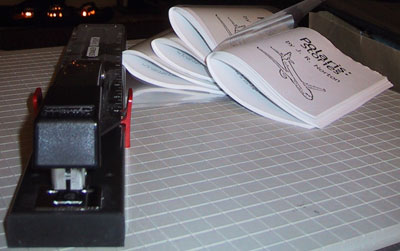
In 2001, we started printing books. Our first releases were printed on a photocopier. The next round were printed on a laser printer. Now, we print a mix of saddle-stapled, perfect-bound, multimedia, or whatever format fits the project at hand.
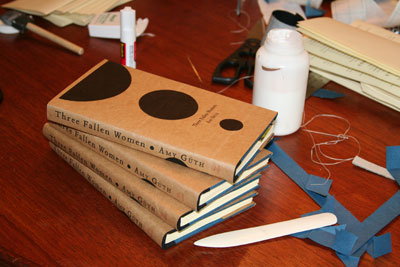
We use recycled materials, combine digital and handmade methods, and are always figuring out new ways to put words on paper. Each of our books is a unique production and you can always know you're getting something special.
So New specializes in books by authors who support onlne literary journals. We love sites like Monkeybicycle/images, OpiumHobart Pulp/images, Pequin/images, Eyeshot/images, and Failbetter/images.
We are happy to send out review copies to print and online publications, as well as bloggers. Please email james@sonewpublishing.com/images and include a link to your publication.
Mini-Distro
The US Postal System working as it does, we pay pretty much the same to mail one thing as we do to mail two or three things.
This postal communism could be used more efficiently -- and to that end we offer a little distro action. If you are unfamiliar with "distro," the term comes from the zine world, where friendly people collect and mail out personal zines, serving as a central distribution point for readers.
How It Works
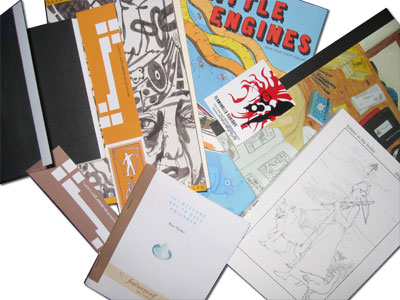
If you make something you think would be of interest to the people who buy our books, we would probably be willing to include copies of it with our orders. As long as we like it, and it doesn't increase our shipping costs too much, we'll happily include your small press magazine, chapbook, sticker, or whatever.
You get access to a new audience, and people who buy our books get cool goodies with their order. Deal!
Mail multiple copies of your creative production to:
So New
PO Box 3423
Eugene, OR 97403
Include a contact email and an explanatory note with your bundle!
Submissions to So New
So New publishes novel-length fiction, essay collections, short fiction and Words!, a quarterly literary magazine of new writing, art and photography.
We seek writing that pushes the bounds of language, that is passionate, exciting, experimental and deeply felt - while still telling a great story. Our brand of fiction is not defined by genre but could contain elements of many methods of storytelling - from crime to romance to chick-lit to action-adventure to you-name-it. We want to read work that is in love with language, excited about telling a story, and ruthless about economy. (Humor and sex keep us interested, too.)
For writers we have never worked with before, Words! is the best way to get our attention. Deadlines for the magazine vary, so check back often. We accept fiction up to 5000 words, original personal essays up to 5000 words on any subject (society, lit-arts, culture, technology, art, design, etc, etc) and color or black and white illustration or photography. We accept work that previously appeared online so long as the author retains copyright. Send submissions for Words! via email to submissions at sonewpublishing.com
For new writers, we also accept fiction and short story collections up to 20,000 words for publication as a mini-book. Mini-books are 8.5x5.25, saddle-stapled, plastic-covered creations that bridge the gap between literary fiction and graphic novels. Our mini-books almost always include art and tend to make people go, "Damn, that's cool." Previous writers who have published mini-books with SNM have been David Barringer, Magdalen Powers, Jami Attenberg and Derek Powazek.
To submit your potential mini-book to So New, send your manuscript formatted in double-spaced, 12 pt. Times New Roman and printed on regular white office paper to:
So New Media
PO Box 3423
Eugene, OR 97403
Please make the text easy to read, and use page numbers. Include a self-addressed and stamped envelope if you would like your manuscript returned. Don't forget to put your name, address and email address on the first page. Also, if you would like us to respond, use your real name. Give us two months to get back to you, and feel free to send your manuscript to other publishers while you are waiting for us to reply, if the opportunity arises.
For trade paperbacks, we work exclusively with authors we already know, so please check out Words! or consider submitting a mini-book idea. Thanks!
+++
My aunt was so excited when I told her about So New. She is a closet writer / artist who has written and illustrated, I don't know how many stories about our family and the folks who live in her small south western town of Joshua Tree.
And so for the last couple of months she has been polishing her stories and amazingly asking people to read them and offer comments. I was pretty impressed with several of them and hope she makes the leap to submitting them. I think she is going to go the way of a chapbook since it would allow her to present not only her writing but also her quirky illustrations. I am secretly wishing her lots of success. Our local paper has recently asked if they could print one of her stories.
Our Editorial Board
Savannah Schroll/images
David Barringer/images
Amy Rainey/images
Kevin Fanning/images
Contact
If you need to get in touch with us, please send an e-mail to james@sonewpublishing.com
Please use a subject line and make your subject something that does not look like spam, because we get a lot of spam.
If you want to send us something in the mail, send it to our PO Box:
So New
PO Box 3423
Eugene, OR 97403
We try to respond to all inquiries as quickly as possible. However, we've all got day jobs, and sometimes it takes a while. Keep faith!
Our Authors:
- Jamie Allen, The Horrible Humor
- Jami Attenberg, Deli Life
- David Barringer, American Home Life,Terminally Curious
- Kevin Fanning, Twelve Times Lost
- David Gianatasio, Swift Kicks
- Amy Guth, Three Fallen Women
- Maura Johnston, Help Wanted
- Greg Knauss, Rainy Day Fun and Games for Toddler and Total Bastard
- Jen Michalski, Close Encounters
- Neal Pollack, Beneath the Axis of Evil
- Derek Powazek, San Francisco Stories
- Magdalen Powers, Hand Over Fist
- Savannah Schroll, Consumed, editor
- Claire Zulkey, Girls! Girls! Girls!
Books
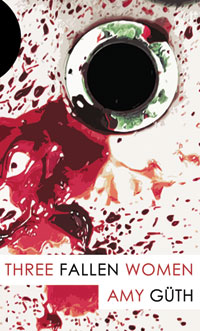
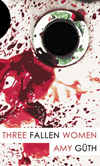
Three Fallen Women
by Amy Güth
Price: $14
(This is the discounted, "direct from SNM" price!)
Format: Hardcover
Availability: In stock, Shipping Normally
Amy Guth's violent and shimmering debut novel is the story of three women caught in the vortex of breaking down. For Helen,a painter reawakening after a long period of self-destruction, peace is the choice between the love of her life and her new-found freedom. For Carmen, addiction will define the final throes of her broken heart. And for Frieda, the perfect housewife, catharsis is defined by sex and murder.
Three Fallen Women unapologetically weaves graphic adventure with heartbreak and sweetness to fashion a new brand of fiction. Equal parts feminist battle cry, anti-love story, and twisted metamorphosis, this is a novel that refuses conventional storytelling and lands a hard suckerpunch in the gut of the patriarchy.
Amy Güth has garnered a solid reputation in indie-lit circles as a consistently dynamic and entertaining live performer. Her readings are nothing short of performance art spectacles, including audience participation, props, and a punk rock energy that always attracts a large and enthusiastic crowd. Her debut novel brings that same energy to print.
So New is proud to present Three Fallen Women by Amy Güth.
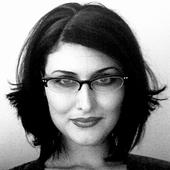
Amy Güth writes daily at Big Mouth Indeed Strikes Again and monthly at Eleuthromaniac, a socio-feminist column for Outcry Magazine. Her work has previously appeared in
- The Believer
- Monkeybicycle
- Four Magazine
- PerformInk Magazine
She has collaborated on various shows within Second City's Training Center (Uterine Wailing Wall, Anton Chekhov's Bastard Child), and is a contributing editor of the online lit mag, B'nai Say.
The select few remember the days when she dabbled in improv, as well, including the time when she did improv-coke off of a dead improv-hooker. Learn more at Guth-a-Go-Go!
Three Fallen Women is her first novel.
+++
Amy Guth Interview by Ninth Letter
[from Ninth Letter] "The poets say genius is wisdom and youth—so does that make writer Amy Guth a bonafide genius-type? Wisdom—check. Youth—check. Throw in wit and whimsy when describing her dynamic readings/performances, add splashes of violence and call-to-arms feminism in her writing, and you start to get a sense of the multi-faceted Ms. Guth.
"A nomad who's lived and toured all over the country, Amy Guth now resides in Chicago where she has dabbled in improv and collaborated on shows in the Second City Training Center. Currently she hosts The Fixx monthly reading series; as well as freelancing for such publications as The Believer and Bookslut, working as an assistant fiction editor at 42 Opus, putting the finishing touches on her next two novels, and just being fabulous in general.
"Ninth Letter dropped in on Amy's reading from her novel Three Fallen Women at Quimby's Bookstore in Chicago in September, 2006. What happens in Chicago stays in Chicago—suffice it to say that the writing was powerful and the event memorable, sentiments all Guth fans take away from time spent with her."
Yay, Amy! (also, we have no problem loving our cheesecake!)
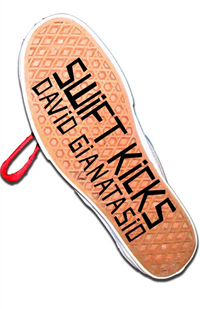
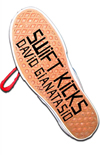
Swift Kicks
by David Gianatasio
with an introduction by Claire Zulkey
Price: $14
Format: Hardcover
Availability: Shipping Normally!
David Gianatasio is not afraid to use all caps. At first we were a little suspicious of a writer who likes to use the Web-parlance for screaming at someone in much of his writing - and then it began to sink in:
David is crazy.
And the stories in this collection are fine proof of the fact. A story that seems like a straight suspenseful, X-Filesesque adventure becomes something twisted and - ultimately - depraved and hilarious. Something itches into your brain and makes the crazy shared.
David likes to take the common and mundane and warp it just a little, just a tweak to make you believe you know where he's headed. . . before yanking the tablecloth out altogether to watch the dishes go flying.
Swift Kicks is full of the little punches that make life fun, the brushes with mania that shove us through our office mazes and coffee-soaked days. This is the kind of book you want to leave in the company breakroom once you're done with it, because crazy this good deserves to be shared, whether they know it or not.
Including an introduction by Claire Zulkey So New Media is proud to present David Gianatasio's first collection.
David's work has appeared all over the Web, including some of these fine sites:
- Ad Week's Ad Freak
- Alice Blue Review
- The 2nd Hand
- Flymf
- Ad Freak again!
- McSweeney's Internet Tendency
- Pindeldyboz
- Eyeshot
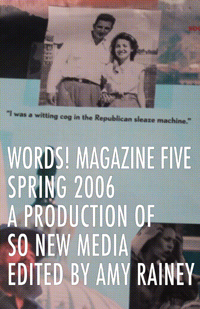
Words! Words! Words!
Magazine
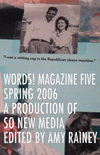
Issue 5
Price: $5.00 US
Availability: Shipping Normally!
Or get both Words 4 + 5 for only $8
Save $$!
Oh yes, it's here. And it's so good. Why? Because these authors are all lying to you, and you're going to love every word of the delicious deception. Who stepped up to the plate?
- Savannah Schroll
- Timber Masterson
- Timmy Waldron
- Simone Cerioli
- James Stegall
Edited by Amy Rainey, armed with only the subject "Lies," these authors took on everything from Satan to sex to the Elephant Man (although no sex with the Elephant Man, so far as we could tell.)
Shocking, funny, and 100% pure lies, these stories will tug on your heart and slap you in the face. Get ready.

Plus, Still Available:
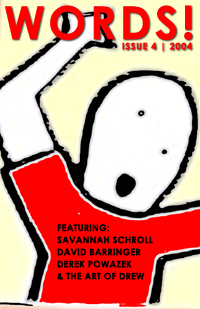
Words! Words! Words!
Magazine
Issue 4
Price: $5.00 US
Availability: S
Or get both Words 4 + 5 for only $8
Save $$!
New stories by the finest writers working online, including Savannah Schroll, David Barringer, Derek Powazek, Kathy Fish, Steve Himmer, Ryan Kennebeck and Sean Ferrell, and the photography of Beth Stegall.
Art kindly provided by drew of toothpastefordinner.com, plus a Coffee Hamster mini-poster perfect for a cubicle near you!
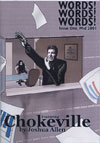
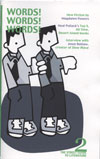
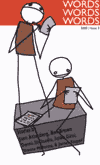
Words! Words! Words! Magazine is So New Media's showcase for some of the best writing online. Past issues have featured Neal Pollack, Maggie Powers, Ben Brown, Jamie Attenberg, Claire Zulkey, and many, many talented others.
The first issue was printed in New Zealand, the second in El Paso, the third in Austin, and the fourth will be coming at you from Germany, so don't miss out. We are well-traveled!

Consumed:
Women on Excess
edited by Savannah Schroll
Format: Trade Paperback
Price: $10
Listen to an MP3 interview with Consumed editor Savannah Schroll, given to WITF in PA on November 14, 2005!
From Savannah:
Okay, here's THE IDEA:
We are women driven by consumption and the insatiable desire for bigger, for better, for more. It's a response programmed into our psyches even before we're fully cognizant of media culture, and it's transforming the natural course of civilization, history, and ultimately humanity. It's invisible to us because it's indivisible from our identities.
This collection is not about goods alone, but everything we crave--lost time, gluttony, hedonism, addiction--anything related to the pleasures, pain, joys and evils of wasting, buying, imbibing, or ingesting--even accumulating. The authors and artists here have complete creative freedom within the multiple definitions of consumption and all its lusty, ravenous, and sweaty implications.
The authors and artists in this anthology are exclusively women whose work has appeared online. They are sprinkled throughout the United States and England. I sought to incorporate each particular contributor's work because they have a style or voice that is individually arresting but also works beautifully within the whole. With this anthology, I hope to amplify their unique talents and bring satisfied smiles to hungry hedonists everywhere.
Who bit?
Consumed Authors:
- Claire Zulkey
- Jai Clare
- Jackie Corley
- Pia Z. Ehrhardt
- Claudia Smith
- Amy Havel
- RoseMarie London
- Rochelle Spencer
- Gail Louise Siegel
Consumed Artists:
- Kate Bingaman
- Roxanne ('Roxi') Carter
- Caroll Planque
- Bridget Riversmith
- Brenda Stumpf
- Gilda Davidian
Consumed's Pia Ehrhardt won the annual Narrative Magazine Prize.

SOME FAMOUS QUOTES TO SET THE MOOD:
"We're consumers. We're by-products of a lifestyle obsession. Murder, crime, poverty -- these things don't concern me. What concerns me is celebrity magazines, television with five hundred channels, some guy's name on my underwear. Rogaine, Viagra, Olestra." -- from Fight Club, Chuck Pahlaniuk
"I like my money right where I can see it... hanging in my closet." --Carrie Bradshaw, Sex & the City
"Junk is the ultimate merchandise. The junk merchant does not sell his product to the consumer, he sells the consumer to the product. He does not improve and simplify his merchandise, he degrades and simplifies the client."--William S. Burroughs
"During the earlier stages of economic development, consumption of goods without stint, especially consumption of the better grades of goods,--ideally all consumption in excess of the subsistence minimum, --pertains normally to the leisure class." -Thorstein Veblen, The Theory of the Leisure Class, 1902.
"All over the place, from the popular culture to the propaganda system, there is constant pressure to make people feel that they are helpless, that the only role they can have is to ratify decisions and to consume." --Noam Chomsky
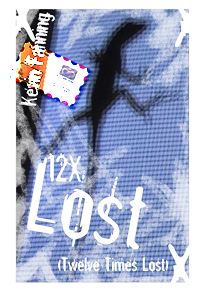
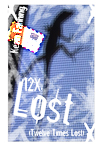
Twelve Times Lost
by Kevin Fanning
Price: $7
Format: Trade Paper
Availability: In Stock!
"I woke up driving and screaming. There was a row of headlights in front of me, and engines and horns everywhere."
Partly dream, partly a rumination on the effects of memory, this haunting cycle of interconnected flashbacks links fantasy and "reality" in unsettling and unforgettable ways.
Kevin Fanning can be found on nearly every fiction site online. His non-fiction appears regularly at The Morning News.
So New Media is very proud to finally make this book available!
More Background on SoNewPublishing.com
SoNewPublishing.com, often referred to as "So New," was a niche, ultra-micro-mini publishing company that emerged in the early 2000s. Based in Eugene, Oregon, the company was dedicated to publishing experimental, edgy, and innovative literary works, primarily from writers who had honed their craft online. Although the website is no longer active and its domain has changed ownership, So New’s legacy offers a fascinating glimpse into the world of independent publishing and its cultural significance.
History and Founding Vision
So New was founded in 2001 as a passion project by a small group of literary enthusiasts. Operating on a shoestring budget, the company began by producing books using photocopiers and later transitioned to laser printers. The founders were driven by a love for literature and creativity rather than profit, as evidenced by their description of themselves as “an ultra-micro-mini publishing company” that didn’t make money but thrived on artistic expression.
The company’s ethos revolved around pushing the boundaries of traditional publishing. It specialized in creating unique literary products that combined literature with multimedia elements. This DIY approach mirrored the indie music scene's ethos, with So New likening its books to “indie rock EPs.” Each publication was treated as an artistic project, often incorporating recycled materials and handmade methods.
What So New Was Known For
So New carved out a niche for itself by focusing on authors who supported online literary journals. It collaborated with writers from platforms like Monkeybicycle, Opium Magazine, Hobart Pulp, and Failbetter. The company’s publications ranged from novel-length fiction and essay collections to mini-books and a quarterly literary magazine called Words!.
Key highlights of So New’s offerings included:
-
Mini-Books: These were small-format publications that bridged the gap between literary fiction and graphic novels. They often featured art alongside text, creating visually engaging works.
-
Experimental Fiction: The company sought writing that was passionate, experimental, and deeply felt while maintaining strong storytelling.
-
Collaborative Distribution: So New embraced a “mini-distro” model inspired by zine culture. This allowed them to include other small press materials with their book shipments, fostering a sense of community among independent creators.
Audience and Cultural Impact
So New’s audience primarily consisted of readers seeking unconventional literature outside mainstream publishing's confines. Its focus on experimental fiction and multimedia appealed to younger, internet-savvy readers who were drawn to innovation and authenticity in storytelling.
Culturally, So New played a role in democratizing literature by providing a platform for emerging voices. It championed authors who might have been overlooked by larger publishers due to their unconventional styles or niche appeal. By doing so, it contributed to the broader indie publishing movement that sought to challenge traditional publishing norms.
Notable Authors and Works
So New published works by several notable authors who gained recognition within indie-lit circles:
-
Amy Guth: Her debut novel Three Fallen Women was described as a feminist battle cry that blended graphic adventure with heartbreak.
-
David Gianatasio: His collection Swift Kicks showcased his knack for blending humor with suspense.
-
Jami Attenberg: Known for Deli Life, Attenberg later achieved mainstream success with novels like The Middlesteins.
These authors often brought their unique voices to So New’s catalog, enriching its reputation as a hub for experimental literature.
Press Coverage and Reviews
While So New did not receive widespread media coverage due to its small scale, it garnered attention within indie literary circles. Bloggers and online reviewers often praised its innovative approach to publishing and its commitment to showcasing emerging talent. The company also sent review copies to print and online publications, further building its reputation among niche audiences.
Challenges Faced
Operating as an ultra-micro-mini publisher came with significant challenges:
-
Limited Resources: With no dedicated office space or full-time staff, So New relied on the passion of its founders and contributors.
-
Financial Constraints: The lack of profitability meant that the company operated more as a labor of love than a sustainable business.
-
Niche Appeal: While its focus on experimental literature attracted a dedicated following, it also limited its broader market reach.
Despite these challenges, So New remained true to its mission until it ceased accepting submissions following the domain's change in ownership.
Legacy and Significance
Although SoNewPublishing.com is no longer active, its impact on indie publishing endures. The company exemplified how small presses can serve as incubators for creative talent and innovation. Its emphasis on community-building through collaborative distribution and support for online literary journals highlighted the potential of grassroots publishing efforts.
In today’s publishing landscape—dominated by large corporations—So New serves as a reminder of the importance of independent voices in fostering diversity in literature. Its model has inspired other small presses to experiment with formats, collaborate with creators across disciplines, and prioritize artistic integrity over commercial success.
SoNewPublishing.com may have been small in scale, but its contributions to indie literature were significant. By championing experimental storytelling and fostering community among creators, it left an indelible mark on the world of independent publishing. Its story offers valuable insights into how passion-driven initiatives can challenge norms and create lasting cultural impact—even without financial success or widespread recognition.
